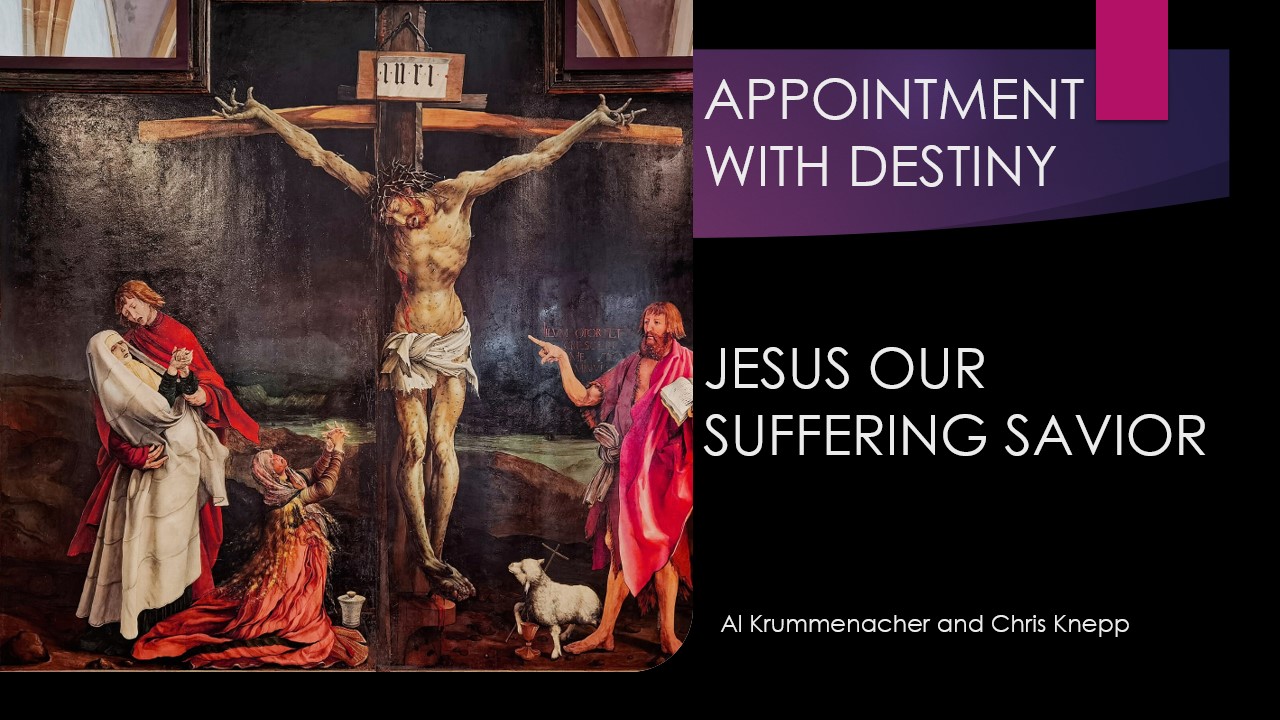
Appointment with Destiny 1
Chris Knepp & Al Krummenacher

Appointment with Destiny 1
Links
<< Home >> << Appointment Menu >>
Appointment with Destiny 1 – The Text
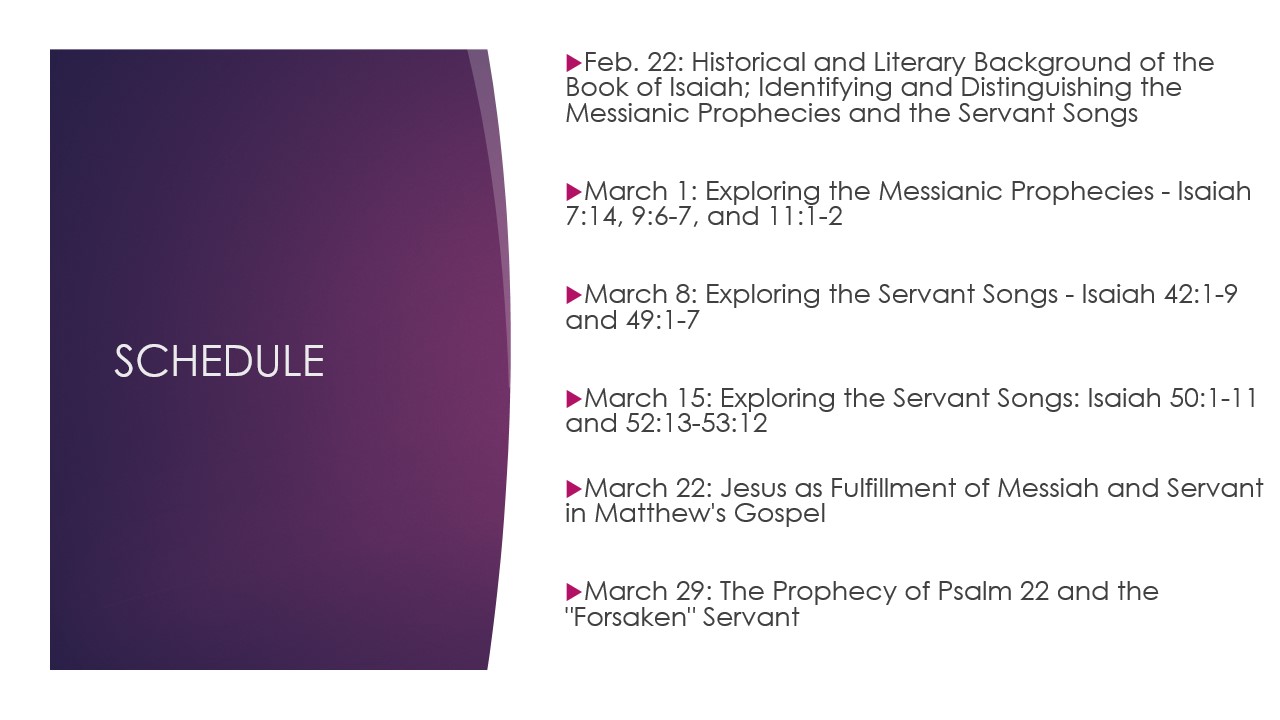
Jesus Our Suffering Savior - Our Schedule
· Feb. 22: Historical and Literary Background of the Book of Isaiah; Identifying and Distinguishing the Messianic Prophecies and the Servant Songs
· March 1: Exploring the Messianic Prophecies - Isaiah 7:14, 9:6-7, and 11:1-2
· March 8: Exploring the Servant Songs - Isaiah 42:1-9 and 49:1-7
·
March 15: Exploring the Servant Songs: Isaiah
50:1-11 and 52:13-53:12
· March 22: Jesus as Fulfillment of Messiah and Servant in Matthew's Gospel
· March 29: The Prophecy of Psalm 22 and the "Forsaken" Servant
“No Old Testament prophet stands closer to Christ's cross than does Isaiah."
History and Literary Background of Isaiah
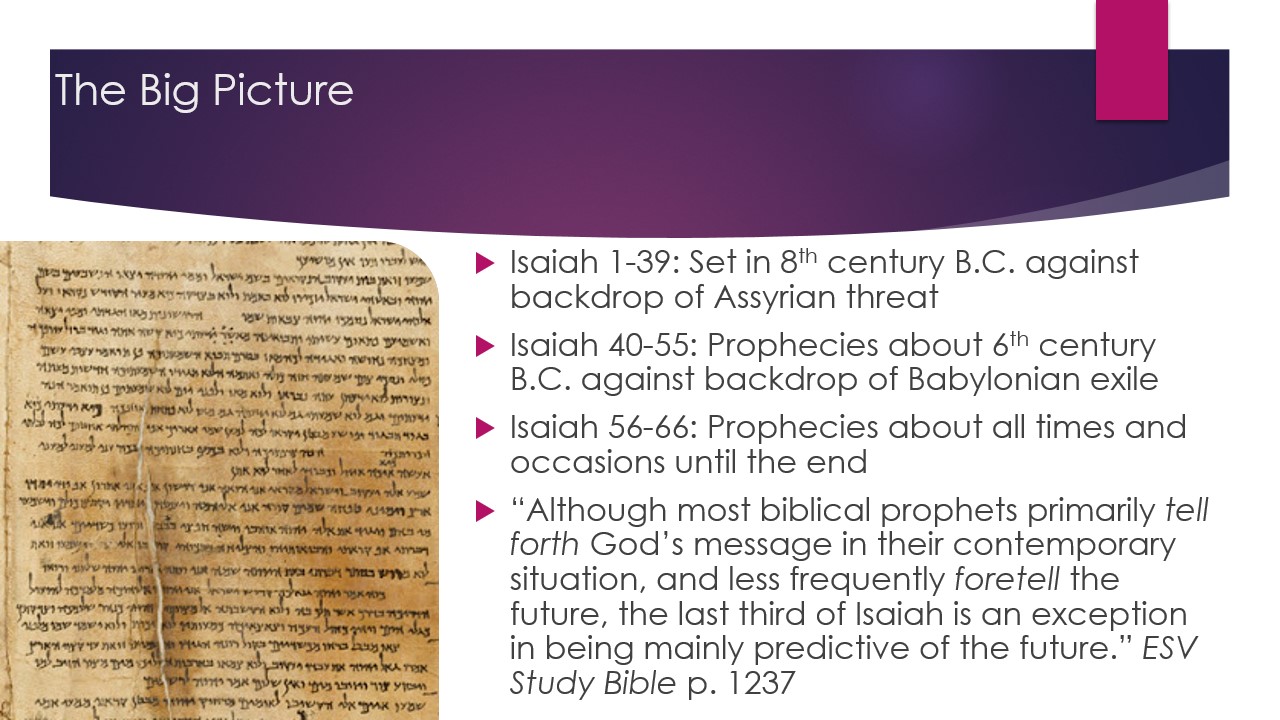
The Big Picture
· Isaiah 1-39: Set in 8th century B.C. against backdrop of Assyrian threat
· Isaiah 40-55: Prophecies about 6th centuryB.C. against backdrop of Babylonian exile
· Isaiah 56-66: Prophecies about all times and occasions until the end
· “Although most biblical prophets primarily tell forth God’s message in their contemporary situation, and less frequently foretell the future, the last third of Isaiah is an exception in being mainly predictive of the future.” ESV Study Bible p. 1237
Authorship, Date, and Setting
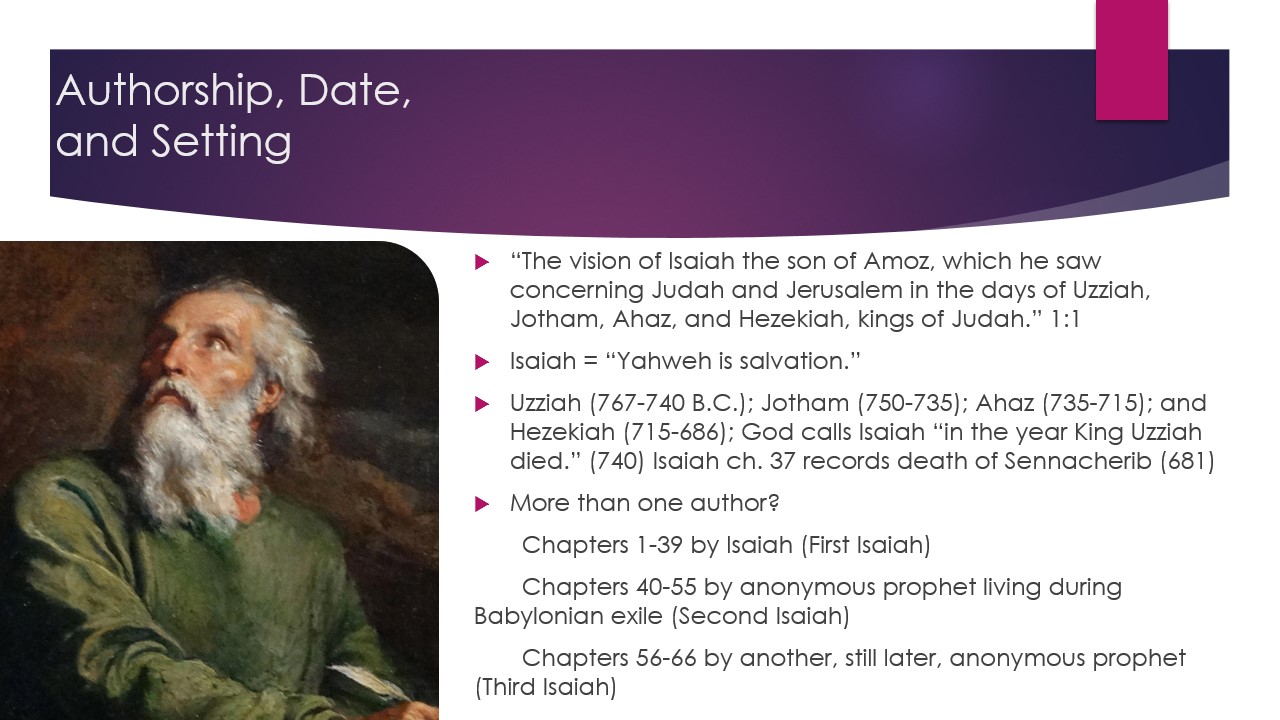
· “The vision of Isaiah the son of Amoz, which he saw concerning Judah and Jerusalem in the days of Uzziah,Jotham, Ahaz, and Hezekiah, kings of Judah.” 1:1
· Isaiah = “Yahweh is salvation.”
· Uzziah (767-740 B.C.); Jotham (750-735); Ahaz (735-715); and Hezekiah (715-686); God calls Isaiah “in the year King Uzziahdied.” (740) Isaiah ch. 37 records death of Sennacherib (681)
· More than one author?
Chapters 1-39 by Isaiah (First Isaiah)
Chapters 40-55 by anonymous prophet living during Babylonian exile (Second Isaiah)
Chapters 56-66 by another, still later, anonymous prophet (Third Isaiah)
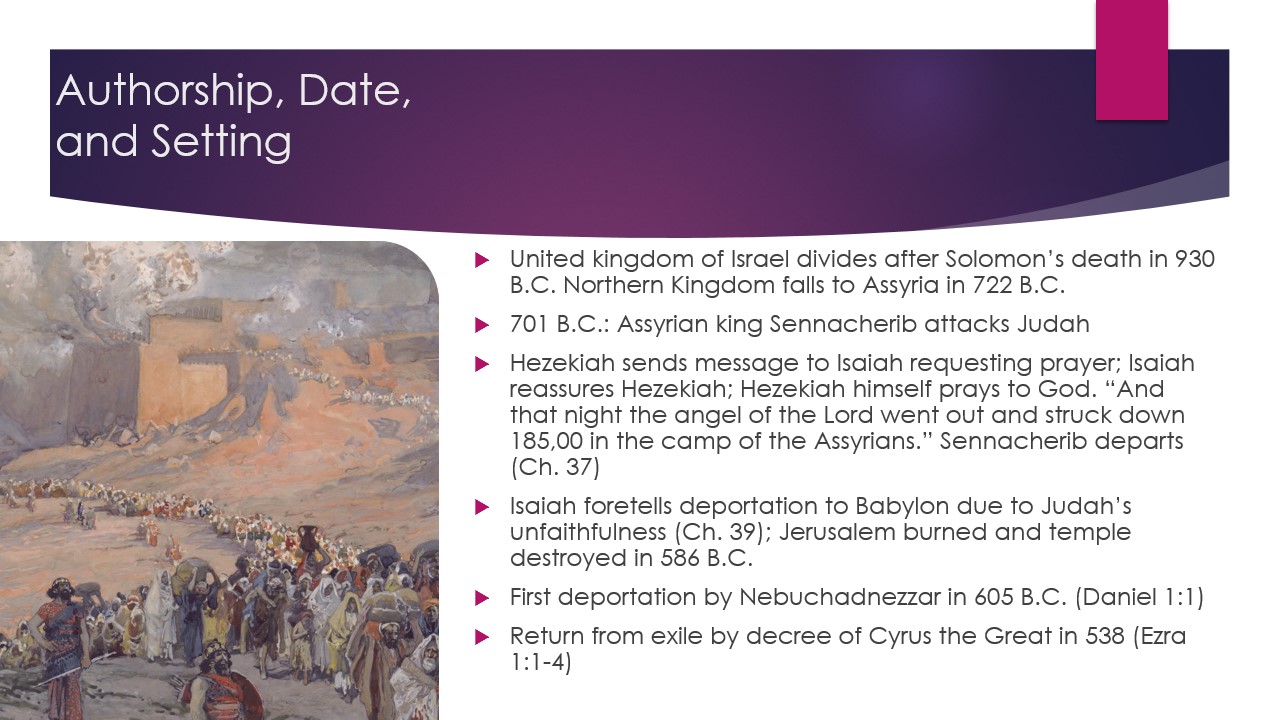
· United kingdom of Israel divides after Solomon’s death in 930B.C. Northern Kingdom falls to Assyria in 722 B.C.
· 701 B.C.: Assyrian king Sennacherib attacks Judah
· Hezekiah sends message to Isaiah requesting prayer; Isaiah reassures Hezekiah; Hezekiah himself prays to God. “And that night the angel of the Lord went out and struck down185,00 in the camp of the Assyrians.” Sennacherib departs (Ch. 37)
· Isaiah foretells deportation to Babylon due to Judah’s unfaithfulness (Ch. 39); Jerusalem burned and temple destroyed in 586 B.C.
· First deportation by Nebuchadnezzar in 605 B.C. (Daniel 1:1)
· Return from exile by decree of Cyrus the Great in 538 (Ezra1:1-4)
Identifying and Distinguishing Isaiah’s Messianic Prophecies
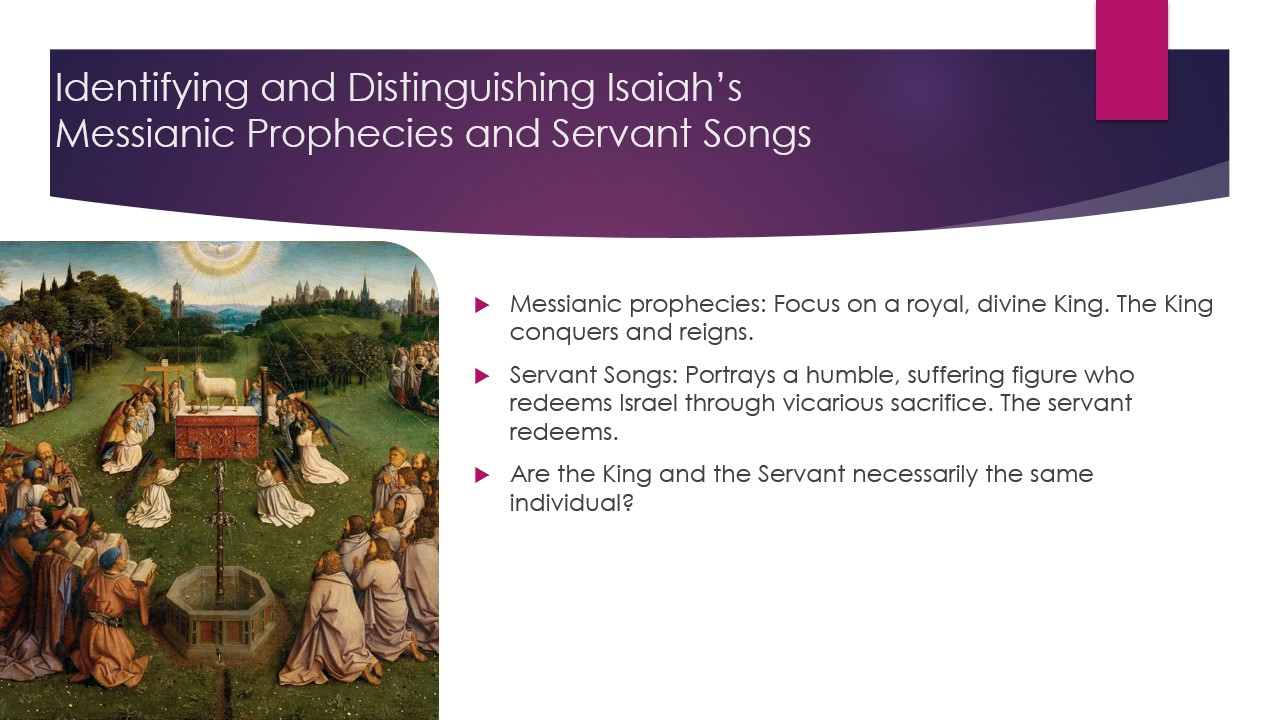
· Messianic prophecies: Focus on a royal, divine King. The King conquers and reigns.
· Servant Songs: Portrays a humble, suffering figure who redeems Israel through vicarious sacrifice. The servant redeems.Are the King and the Servant necessarily the same individual?