Appointment with Destiny 5
Al Krummenacher & Chris Knepp
Appointment with Destiny 5
Links
<< Home >> << Appointment with Destiny Menu >>
Appointment with Destiny 5 - the Text
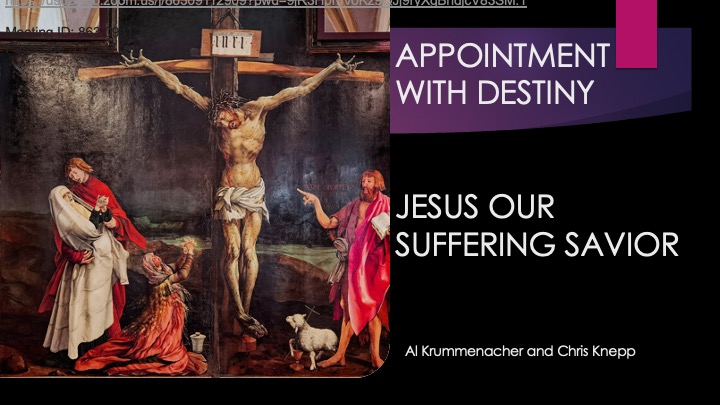
APPOINTMENT WITH DESTINY
JESUS OUR SUFFERING SAVIOR
SCHEDULE
Feb. 22: Historical and Literary Background of the Book of Isaiah; Identifying and Distinguishing the Messianic Prophecies and the Servant Songs
March 1: Exploring the Messianic Prophecies - Isaiah 7:14, 9:6-7, and 11:1-2
March 8: Exploring the Servant Songs - Isaiah 42:1-9 and 49:1-7
March 15: Exploring the Servant Songs: Isaiah 50:1-11 and 52:13-53:12
March 22: Jesus as Fulfillment of Messiah and Servant in the New Testament
March 29: The Prophecy of Psalm 22 and the "Forsaken" Servant
The Isaiah Paradox
How can the anointed Messiah also be the Suffering Servant?
Jesus self-identifies as the fulfillment of both the “Messiah” and the “Suffering Servant” prophesies in the Book of Isaiah
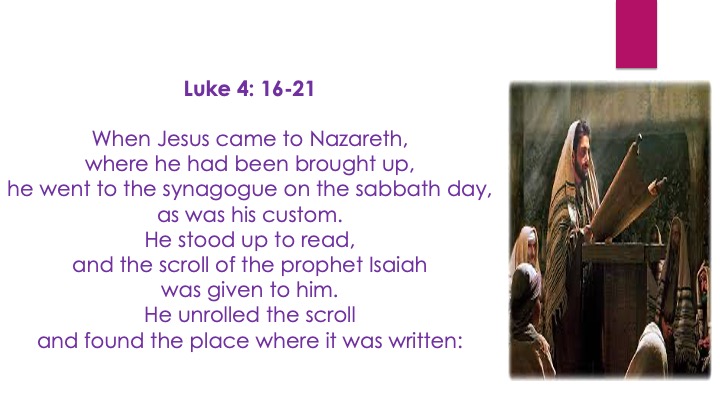
Luke 4: 16-21
When Jesus came to Nazareth, where he had been brought up, he went to the synagogue on the sabbath day, as was his custom.
He stood up to read, and the scroll of the prophet Isaiah was given to him. He unrolled the scroll and found the place where it was written:
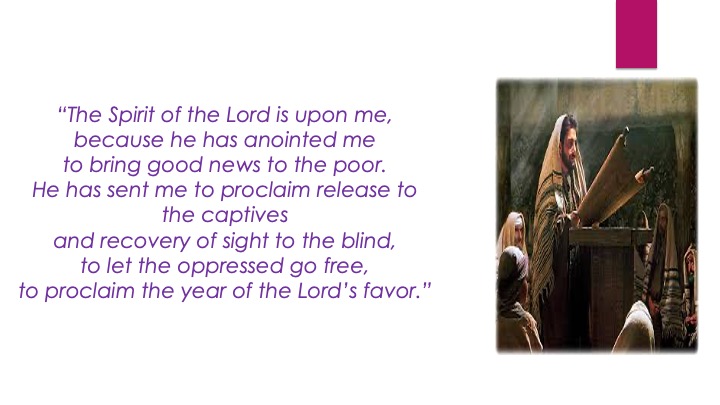
“The Spirit of the Lord is upon me, because he has anointed meto bring good news to the poor.
He has sent me to proclaim release to the captives and recovery of sight to the blind,to let the oppressed go free, to proclaim the year of the Lord’s favor.”
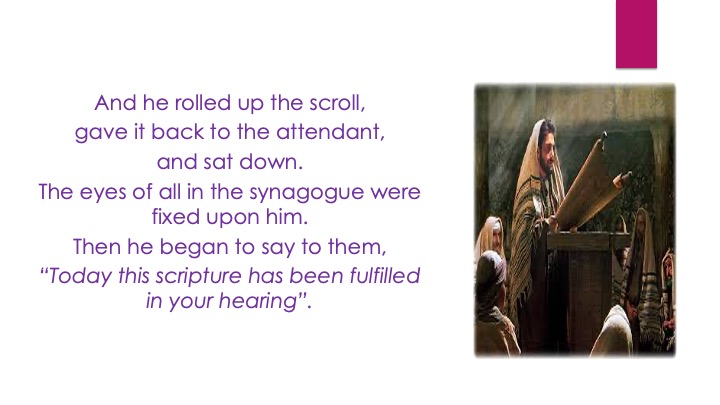
And he rolled up the scroll, gave it back to the attendant, and sat down.
The eyes of all in the synagogue were fixed upon him. Then he began to say to them, “Today this scripture has been fulfilled in your hearing”.
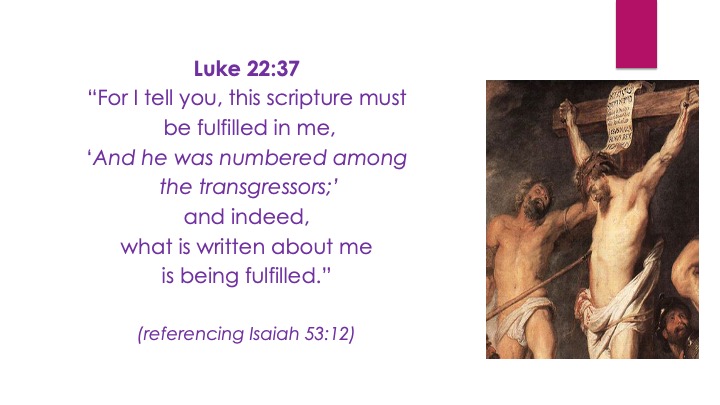
Luke 22:37
“For I tell you, this scripture must be fulfilled in me,
‘And he was numbered among the transgressors;’ and indeed,
what is written about me is being fulfilled.”
(referencing Isaiah 53:12)
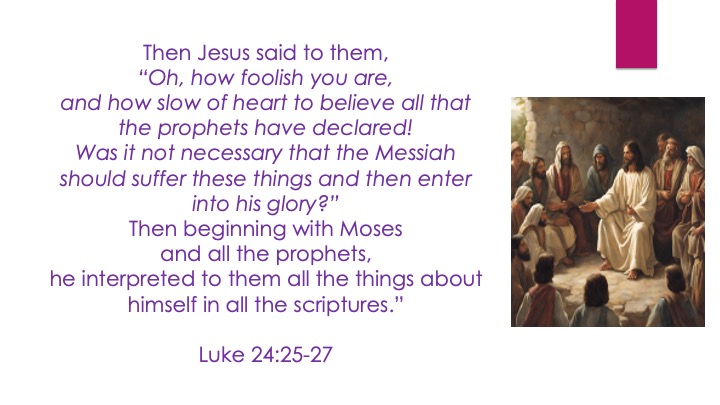
Then Jesus said to them, “Oh, how foolish you are, and how slow of heart to believe all that the prophets have declared!
Was it not necessary that the Messiah should suffer these things and then enter into his glory?”
Then beginning with Moses and all the prophets, he interpreted to them all the things about himself in all the scriptures.”
Luke 24:25-27
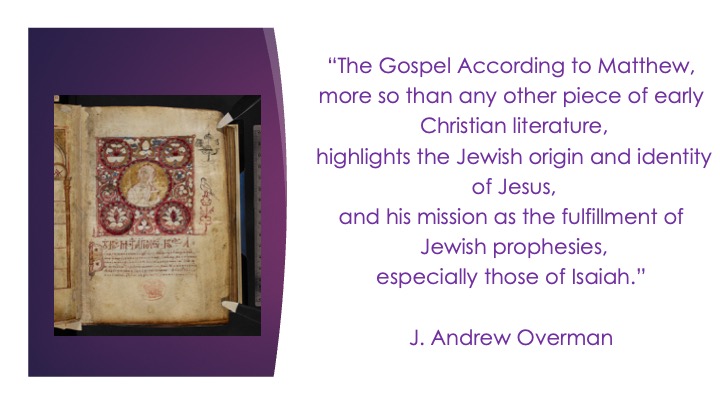
“The Gospel According to Matthew, more so than any other piece of early Christian literature, highlights the Jewish origin and identity of Jesus, and his mission as the fulfillment of Jewish prophesies,especially those of Isaiah.”
J. Andrew Overman
The Paradox Fulfillment
Matthew 16:13-23
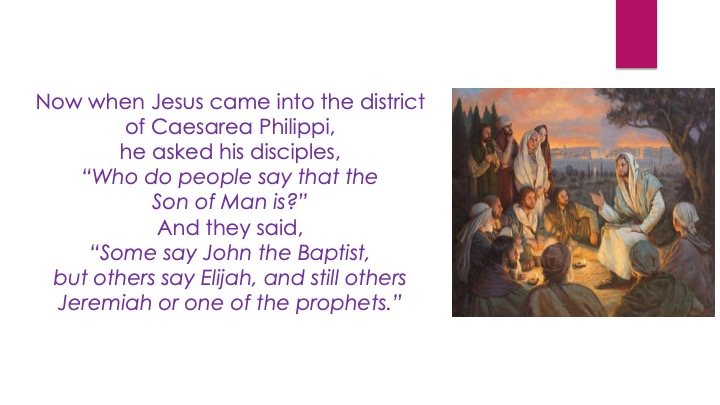
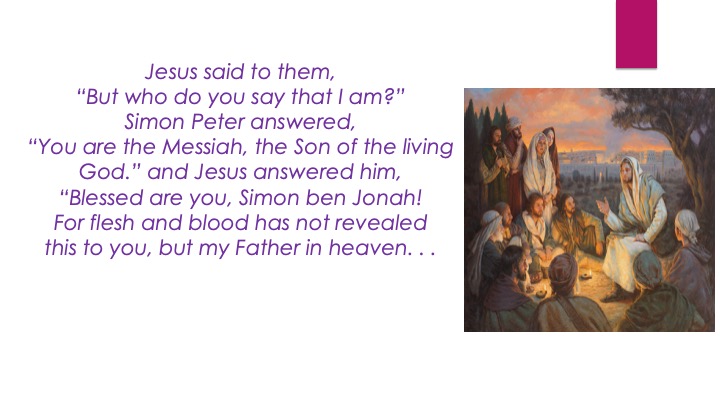
Now when Jesus came into the district of Caesarea Philippi, he asked his disciples,
“Who do people say that the Son of Man is?”
And they said, “Some say John the Baptist, but others say Elijah, and still others Jeremiah or one of the prophets.”
Jesus said to them, “But who do you say that I am?”
Simon Peter answered,
“You are the Messiah, the Son of the living God.” and Jesus answered him,
“Blessed are you, Simon ben Jonah!
For flesh and blood has not revealed this to you, but my Father in heaven.
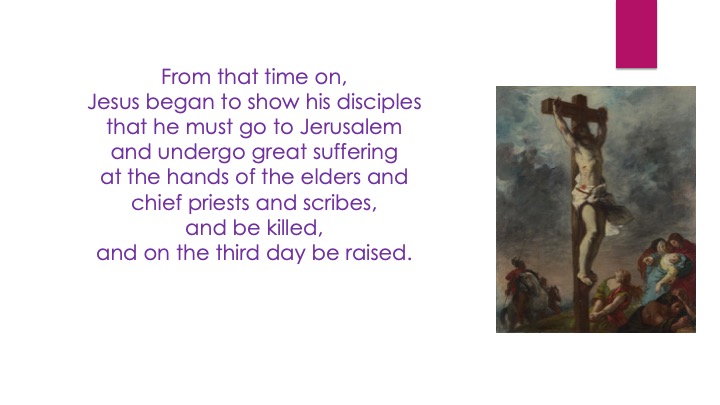
From that time on, Jesus began to show his disciples that he must go to Jerusalem and undergo great suffering at the hands of the elders and chief priests and scribes, and be killed, and on the third day be raised.
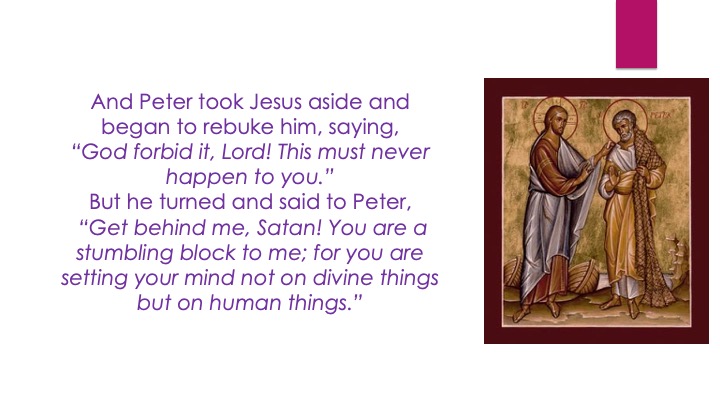
And Peter took Jesus aside and began to rebuke him, saying,
“God forbid it, Lord! This must never happen to you.”
But he turned and said to Peter,
“Get behind me, Satan! You are a stumbling block to me; for you are setting your mind not on divine things but on human things.”
The Isaiah Challenge
“Whoever wishes to be great among you must be your servant,
and whoever wishes to be first among youmust be your slave;
just as the Son of Man came not to be served but to serve,
and to give his life a ransom for many.”
Matthew 20:26-28
The followers of Christ are called to be servant leaders, sacrificing themselves for the healing of the world, just as Jesus fulfilled the role of Suffering Messiah to bring redemption and salvation to all.
“No Old Testament prophet stands closer to Christ's cross
than does Isaiah."
Robert White's intro to Calvin's sermons on Isaiah 52:13-53-12